10-Day Singapore & Malaysia Highlights Tour
Overview
Singapore, Penang, Ipoh, Kuala Lumpur
Download Itinerary:
Chinese Version
Chinese Version
 Instant Messaging
Tour Gallery
Tour Plan
-
Day 1Hometown ✈ Singapore (Arrival airport/Pick up time: SIN/1200 or 1800)
-
Day 2Singapore – Free at Leisure
Grand Mercure Singapore Roxy / Mercure Singapore on Stevens / Orchid Hotel or similar -
Day 3Singapore – Esplanade – Merlion Park – Marina Barrage – Marina Bay Sands Hotel– Apple Marina Bay Sands - Gardens by the Bay – Supertree Grove - Flower Dome – Cloud Forest (admission incl.) – Duty Free Shops – Orchard Road
(B/D: Authentic Singaporean cuisine)
Grand Mercure Singapore Roxy / Mercure Singapore on Stevens / Orchid Hotel or similarMerlion Park: Singapore landmark and the must-see tourist attraction at its business centre. It’s the 8.6- metre-tall Merlion statue spouting water from its mouth is a famous icon of Singapore. Gardens by the Bay: Set in the heart of Singapore’s downtown, Gardens by the Bay is a 101-hectare home to a diverse collection of over 1.5 million plants that hail from almost every continent. Aiming at improving the life quality by enhancing greenery and flora in the city, the Gardens successfully transforms Singapore from a “Garden City” to a “City in a Garden”. Supertree Grove: Consisting of 18 tree-like structures that dominate the Gardens’ landscape with heights ranging from 25m to 50m, these vertical gardens serving multi purposes, such as planting, shading and act as an environmental engine for the Gardens. It is also a home to a collection of rare ferns, vines, orchids, etc., Flower Dome: The world's largest glass greenhouse; adopting the cool-dry Mediterranean climate, this 1.2- hectare greenhouse features a changing display, a flower field, and 8 themed gardens exhibiting exotic flowers and plants from the Mediterranean, South African savannahs and deserts! Cloud Forest: Possessing one of the world’s tallest indoor waterfalls and a lush mountain clad with plants from around the world, Cloud Forest offers cloud forest habitats which are typically found at around 2000m above sea level. Stroll along its unique aerial walkways, while you will enjoy a close-up at (of) the unusual native vegetation while admiring the spectacular views of the Marina Bay Waterfront. Orchard Road: This 2.2-km boulevard is the most famous shopping and entertainment precinct in Singapore, offering retail luxury to international cuisines, from unique souvenirs to the latest fashion trends. -
Day 4Singapore – Little India – Arab Street – Chinatown ✈ Penang, Malaysia – Free at Leisure
B: Hotel / L: On Own / D: On Own
Vouk Hotel Suites or similarLittle India: It is an Indian ethnic community in Singapore. Under the British apartheid policy, Indian immigrants originally lived in the Chulia Kampong area where became too crowded later, so many Indians moved to the present Little India area and continue to preserve their rich Indian cultural heritages, such as festivals, religions, clothes, food, spices, etc. Arab Street: This settlement area was originally allotted to the sultan and later attracted some well-known traders moving from Yemen, some of whose descendants are still inhabiting there. Lying within the bustling district of Bugis, Arab Street offers colorful rows of shops selling textiles, leather, perfumes, and jewelry. There are also many Middle Eastern restaurants and quaint cafes serving specialty foods to locals and visitors. Sultan Mosque, the oldest mosque in Singapore located in the area should never be missed as well! Chinatown: Chinatown's bustling main street is a feast for the senses, offering authentic Hokkien and Cantonese dishes like Hainanese Chicken Rice and Bak Kut The (herbal pork bone soup). This lively district is also home to a variety of handicraft shops and souvenir stalls. The vibrant atmosphere, from daytime markets to nighttime illuminations, makes it a perfect spot to experience Singapore's cultural and culinary heritage. -
Day 5Penang – George Town (Trishaw Ride) - Art Street – Clan Jetties – The Blue Mansion – Love Lane - Penang Hill (Cable Car)– Gurney Drive Hawker Centre
(B/L: Nyonya cuisine)
Vouk Hotel Suites or similarGeorge Town (Heritage Trishaw Ride): George Town, the capital of Penang, was once a marine fuel station and a trade centre for Indian spices and Chinese tea, cotton and other commodities, so it presents rich blend of British, Moorish, Chinese and Indian cultures. Taking the traditional trishaw ride exploring this multi-cultural city’s significant landmarks, historical ruins and UNESCO World Heritage Sites, allow you to discover the city in depth. Art Street: In 2012, Penang city government implemented a project called “Mirrors George Town”, inviting some artists to paint many interesting 3D incorporated murals on various street walls in the designated reserved area, which have subsequently become one of the cultural landmarks of the city as well as a must-visit attraction for tourists. Among them, the three most popular works by Lithuanian-born artist Ernest Zacharevic – “Children on Bicycle”, “Boy on Motorcycle” and “Boy on Chair” are not to be missed. Nearby there are also some redeveloped ancient residences, cafés, ice cream shop, souvenir shops… Strolling and cycling there are definitely enjoyable. Clan Jetties: Located at the northeast waterfront of Penang, Clan Jetties are some old floating villages where the first generation of Chinese immigrants settled in Penang. The jetties are named after the residents’ respective common surname. There were originally 9 jetties, but 3 of them have been demolished due to decay by water erosion, aging, etc. Listed as UNESCO World Heritage Site, the surviving 6 jetties perfectly unveil the hardship of the early Chinese immigrants and the traditional water life. The Blue Mansion: Originally a 130-year-old Chinese-style heritage mansion, which was left by the Chinese industrialist Cheong Fatt Tze, who spent most of his life in Malaysia and was once regarded as the richest man there to his descendants. To reflect its glory and grandeur, Cheong kept an eye for every detail and only used the best materials of that time, like the artisans hired from Southern China and the building materials imported from as far as Scotland. The architecture presents his passions and love of Chinese culture and tradition. Blue Mansion is now an entertainment complex offering an 18-suites boutique hotel, restaurants, cafes and bar, and daily guided tours to visitors. Love Lane: Dating back to 1803, this narrow historic street was once known for its brothels. Many of the Chinese-style traditional shops have been transformed to boutique hotels, hostels, hipster cafes and bars, attracting many locals and tourists for sightseeing and nightlife. Penang Hill: Standing at its peak at 830 meters above the sea level, visitors can admire the panoramic view of the Penang Island. Also located in its undeveloped rainforest conservation area is the world-class eco-tourism attraction “The Habitant”. With facilities including natural hiking trails, canopy trail, rainforest suspension bridge, cafes, etc., it aims at raising awareness on the significance of diverse and delicate ecosystems. -
Day 6Penang – Taiping - Kuala Sepetang - Charcoal Factory – Matang Mangrove Forest Reserve – Ipoh
(B/L: Penang Prawn Noodles)
Impiana Hotel Ipoh or similarKuala Sepetang: Formerly known as “Port Weld”, this traditional Chinese fishing village is an important port for connection with the outside world in the British colonial era. You will see many tall wooden houses and fishing boats along the river banks. It also has reputation of “Clam Capital” due to its abundant production of clam. Charcoal Factory: Mangrove is the raw material for making charcoal, and the vast mangrove forest offers plentiful material supply to the charcoal industry in Kuala Sepetang. Most of the charcoal produced is supplied to Japan, and only a small portion is sold locally. Matang Mangrove Forest Reserve: The largest mangrove forest in Malaysia, offering buffer protection to Kuala Sepetang against the tsunami in 2004. It provides excellent ecological habitat to different species of animals and plants. The visitor area offers the public an opportunity to gain knowledge on the ecology of the mangroves and the importance of wetland ecological environment. Visitors can also take a boat ride for a close touch to the nature. -
Day 7Ipoh – Perak Cave Temple - Pomelo Farm – Railway Station – Concubine Lane
(B/D: Bean Sprout Chicken)
Impiana Hotel Ipoh or similarPerak Cave Temple: One of the most gorgeous attractions in Ipoh, this temple is built in a cave in 1926 and renowned for its stunning architecture. Climbing up 358 stairs, you will see 40-feet tall Golden Buddha statue surrounded by four guardian deities called goddesses sitting in the main alter. There are also colorful murals depicting events and characters from the Chinese folklore and Buddhist scriptures. Railway Station: A mixed Moorish and Victorian structure, which together with Ipoh Municipal Building, the massive white neoclassical building across the Railway Station, conveys the affluence of the city. Concubine Lane: Located in the Old Town area, this revitalized historic alley is one of the must-visit attractions in Ipoh. There are many stories behind the origin of its name. The most popular one is the local tycoon Yao Tet Shin gave his mistress (“concubine” in Cantonese) a house there to live in. In the alley there are more than 20 two-storey century-old houses with faded wooden sash windows and old exterior walls, retaining its unique heritage and old-world charm, plus the traditional stalls, nostalgic signboards, mural arts, handcraft market, cafes and bars, etc… thus attracting many tourists and hipsters wandering around every day! Many famous movies such as “Lust, Caution”, “After This Our Exile” and “Anna and the King” have filmed here. -
Day 8Ipoh – Kuala Lumpur – Cyberport - Putra Mosque* – Putra Bridge – Perdana Putra (Exterior) – Millennium Monument – Jalan Alor Night Market
(B/L: Bak Kut Teh)
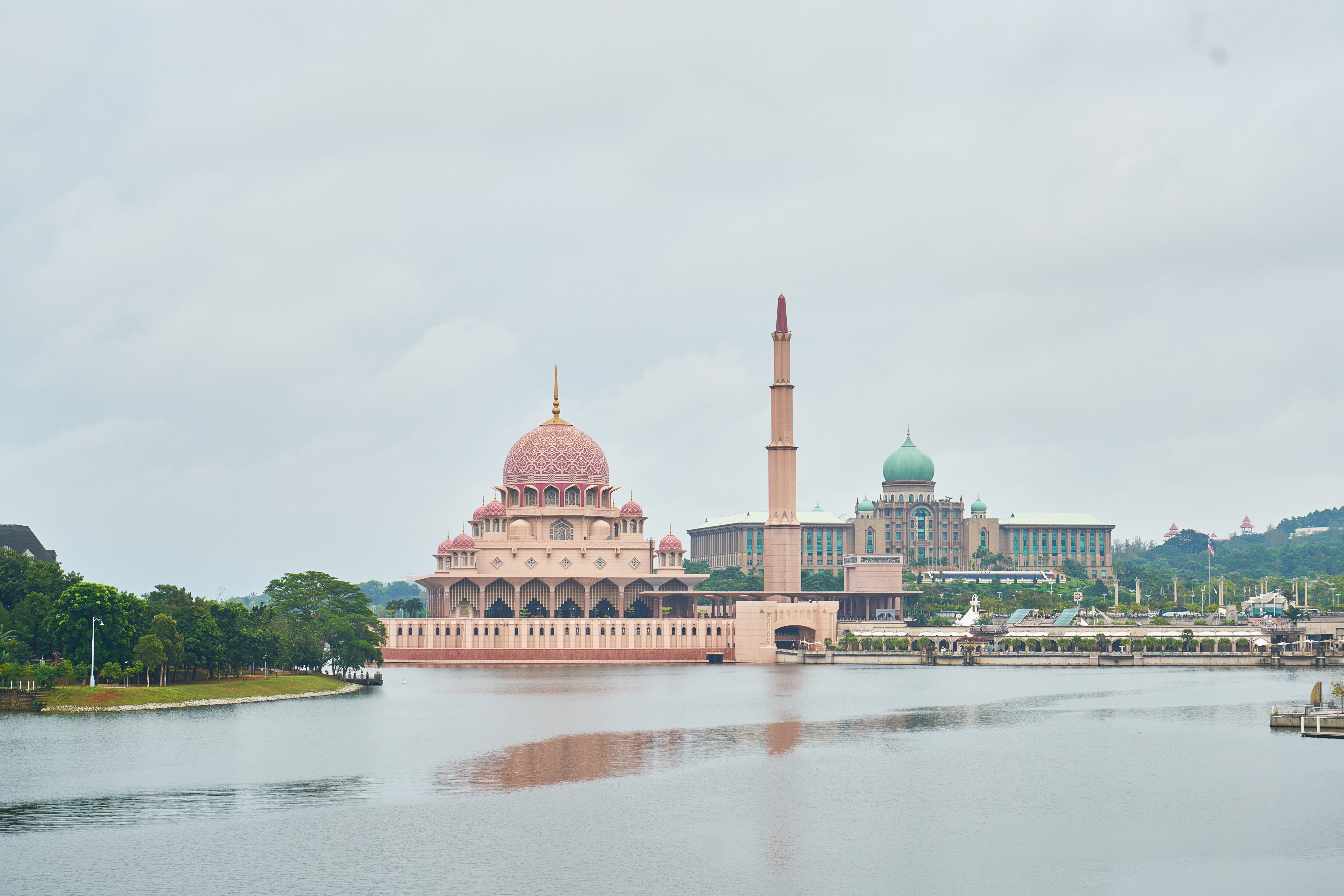
Mercure Trion / Mercure Wisma Shaw or similar[*You are required to cover up (ladies should wear a headscarf) upon entering the Putra Mosque as a sign of respect.] Putra Mosque: Named after Malaysia’s first Prime Minister, the pink-domed Purta Mosque was constructed in 1999 with rose-tinted granite and can accommodate 15,000 worshippers at a time. It integrates Arab-Islamic architectural designs combined with the skills of local craftsmanship inspired by Muslim Persia during the Safavid period. It is undoubtedly one of the most distinctive landmarks in Putrajaya. Millennium Monument: Standing in a 25-hectare park, this 68m-tall national monument is made of solid metal and is shaped like an obelisk with etchings denoting important periods and milestones in the nation's history. At night, it also serves as a beacon projecting strong light to guide the cruise boats. -
Day 9Kuala Lumpur – Istana Negara (Exterior) - Merdeka Square – High Court - Petronas Twin Towers (Exterior) – Batu Caves – Royal Selangor Pewter Factory – Kwai Chai Hong - Petaling Street Market
(B/L: Malaysian Char Siu)
Mercure Trion / Mercure Wisma Shaw or similarMerdeka Square: The usual venue for the annual Independence Day Parade. It witnessed the independence of Malaysia with its national flag being raised for the first time on August 30, 1957. The 95-metre-high flagpole at the southern of the Square is one of the tallest in the world. Batu Caves: A limestone hill with a series of caves and temples, it is one of the most famous Hindu shrines outside of India and is the major venue of Thaipusam celebrations in Malaysia. Climb up 272 concrete steps to reach the largest cave called Temple Cave, with its ceiling over 100 meters high, it also holds ornately decorated Hindu shrines. Kwai Chai Hong: Located in the heart of Kuala Lumpur’s Chinatown, this characteristic laneway was once a prosperous economic centre and major settlement point of Chinese immigrants. It was however gradually abandoned with changes of time. In late 2018, some of the heritage buildings were restored and revitalized with addition of several interactive murals depicting life on the lane back in the 1960s, transforming this alley into a trendy space and hotspot to tourists. -
Day 10Kuala Lumpur ✈ Hometown
B: Hotel / L: On Own / D: On Own
Loading...
Processing...